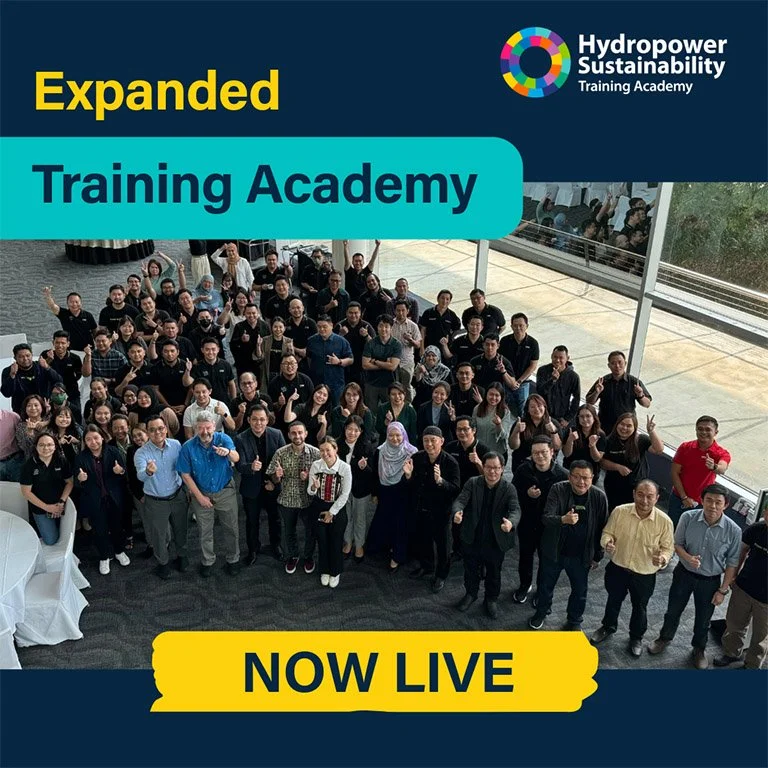
Expanded Hydropower Sustainability Training Academy introduces new learning pathways
The Hydropower Sustainability Alliance (HSA) has launched a major redevelopment of its Training Academy, introducing new learning pathways, professional credentials, options to specialise, and more flexible ways for people and organisations to build expertise in hydropower sustainability.
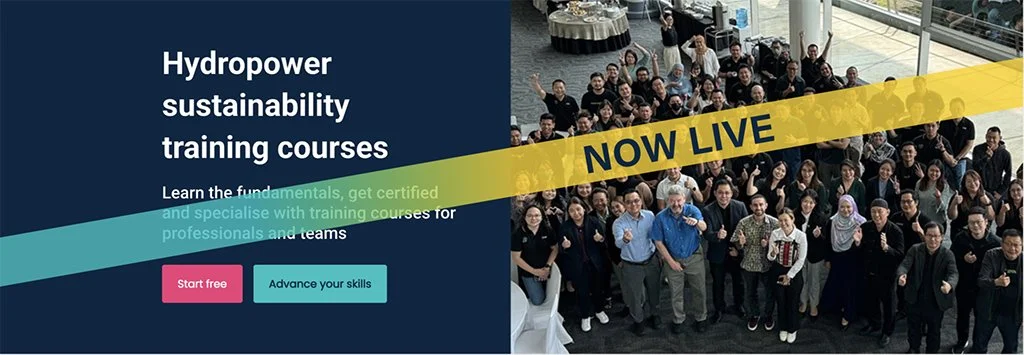
The revamped Hydropower Sustainability Training Academy has been designed to support professionals throughout their careers, with opportunities to enter at the level that matches their existing knowledge and continue developing their expertise as far as they choose.
New learning pathways provide three main stages of development: learning the foundations of hydropower sustainability with a free entry course, becoming an HSS Certified User, and progressing into specialist environmental or social expertise.
The relaunch also introduces new organisational e-learning subscriptions, reduced course fees and an expanded range of learning formats to make training more accessible to professionals and teams around the world.
Explore the new Training Academy
A clearer route through hydropower sustainability learning
For people beginning their learning, the Academy now offers 5 Foundations of Hydropower Sustainability, a new free course introducing the essential principles behind responsible hydropower development and the Hydropower Sustainability Standard (HSS).
Learners who want to build practical knowledge of the HSS can progress through the HSS Certified User pathway, which leads to a recognised professional credential.
Those with more experience who are looking to deepen their expertise further can specialise through dedicated Environmental Specialist and Social Specialist pathways. Both build on the Certified User pathway, ensuring that specialists have a shared grounding in the HSS framework.
Amina Kadyrzhanova, Head of Training Academy at HSA, said: “We want the Training Academy to be somewhere hydropower professionals can return to throughout their careers.
“People come to hydropower sustainability with many different levels of experience and different ambitions. The new Academy gives them a much clearer route through their learning, whether that's about building foundations or developing deeper specialist expertise.
“We have also prioritised making our training to more accessible. The Academy now combines more flexible ways to learn with more affordable course fees, so that professionals in more countries can benefit from the knowledge and practical experience needed to apply the principles of the Hydropower Sustainability Standard.”
More ways to learn
The Academy will continue to combine self-paced e-learning with instructor-led training, including live virtual and in-person options.
This gives individuals and organisations greater flexibility to choose the format that works for them. Instructor-led options include Certified User training, Accredited Assessor Training, Executive Leadership training, G-res tool training and topic-specific programmes, alongside tailored capacity-building support.
New options for organisations
The relaunch also introduces organisational e-learning subscriptions for teams looking to build sustainability knowledge and skills over the longer term.
Three subscription levels will provide organisations with ongoing access to online training, with additional support available depending on the package, including engagement reporting, tailored resources, advisory support and opportunities to combine online learning with instructor-led training.
The new model moves the Training Academy beyond individual, stand-alone courses to place a greater focus on long-term learning and capacity building.
HSA has already trained more than 1,200 professionals across 300 organisations in more than 45 countries through its training programmes.
Explore the new HS Training Academy and find the learning pathway that is right for you.
RELATED NEWS