Climate change is now firmly embedded in discussions about hydropower development, reflected in a growing body of guidance, research and industry initiatives. Martin Fuchs, a hydrologist and climate resilience specialist at AFRY and lead author of the Hydropower Sustainability Alliance's How-to Guides on Climate Change, argues that two factors deserve greater attention within these discussions: systems thinking and longevity. In this guest article, he explores how both influence hydropower's contribution to climate change mitigation and resilience, and why they should play a greater role in decisions about future development and rehabilitation.
The How-to Guides on Climate Change Mitigation and Climate Change Resilience published by the Hydropower Sustainability Alliance in 2025 complement various other guidelines and initiatives within the hydropower and dam sector that have recently been launched, such as ETIP Hydropower´s White Paper on Climate Change and three new bulletins on sustainable dams currently prepared by ICOLD.
This clearly shows that climate change considerations have now fully taken hold in the hydropower sector. Addressing climate change in project development has become essential, both in terms of demonstrating that hydropower is a low-carbon energy source and in terms of adapting hydropower operations to impacts of climate change.
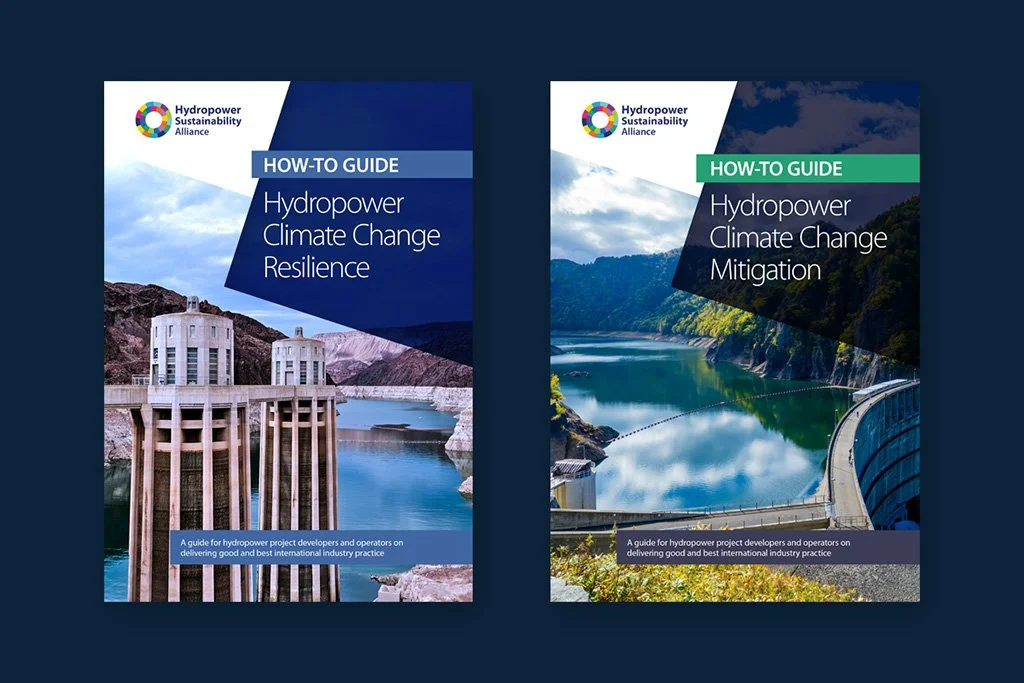
The How-to Guides on Climate Change Mitigation and Climate Change Resilience complement various other guidelines and initiatives within the hydropower and dam sector
Climate considerations at a system level
In line with the principles of the Hydropower Sustainability Standard, the How-to-Guides on Climate Change do not only address the project level, but also consider the role of a hydropower scheme in reducing emissions and building resilience at the system level.
It is these system-level functions that will become increasingly important in the development of new hydropower projects. In particular, hydropower´s ability to store water and energy will be one of the key aspects considered when assessing projects for their contribution to climate change mitigation and resilience.
The paradox is this: if we want hydropower to play a key role in the transition to a sustainable and climate-resilient society, we cannot focus solely on ‘environmentally friendly’ small and medium-sized developments, but we must promote also larger projects capable of storing significant amounts of water and energy.
However, these projects are often controversial, as they can cause significant social and environmental impacts at a local and regional scale. It is therefore important that they are designed and implemented in a way that ensures they are not only sustainable at the systemic level, but also socio-environmentally compliant at the project level.
Defining low-carbon hydropower
Socio-environmental compliance, as defined by the Hydropower Sustainability Standard, addresses a wide range of ESG topics. It also requires the net greenhouse gas emission intensity of a project to be below 100 g CO₂e/kWh. Only then it can be considered a low-carbon energy source.
However, the ultimate goal of the hydropower industry should be to develop projects with life-cycle emissions that are similar to or lower than those of other renewable energy sources such as solar PV (~ 20-60 g CO₂e/kWh) or wind (~10-40 g CO₂e/kWh). In fact, there are many hydropower projects, particularly in temperate and boreal climates, that outperform other renewable projects in terms of carbon footprint, while providing both energy generation but energy storage.
For assessing the carbon footprint of pumped storage hydropower, other criteria and benchmarks have to be applied. The comparison between pumped storage and Battery Energy Storage Systems (BESS) is a hotly debated topic, with both technologies having their advantages. In terms of carbon footprint there is probably no clear winner, but an emphasis on project size and longevity typically favours pumped storage.
Water storage and climate resilience
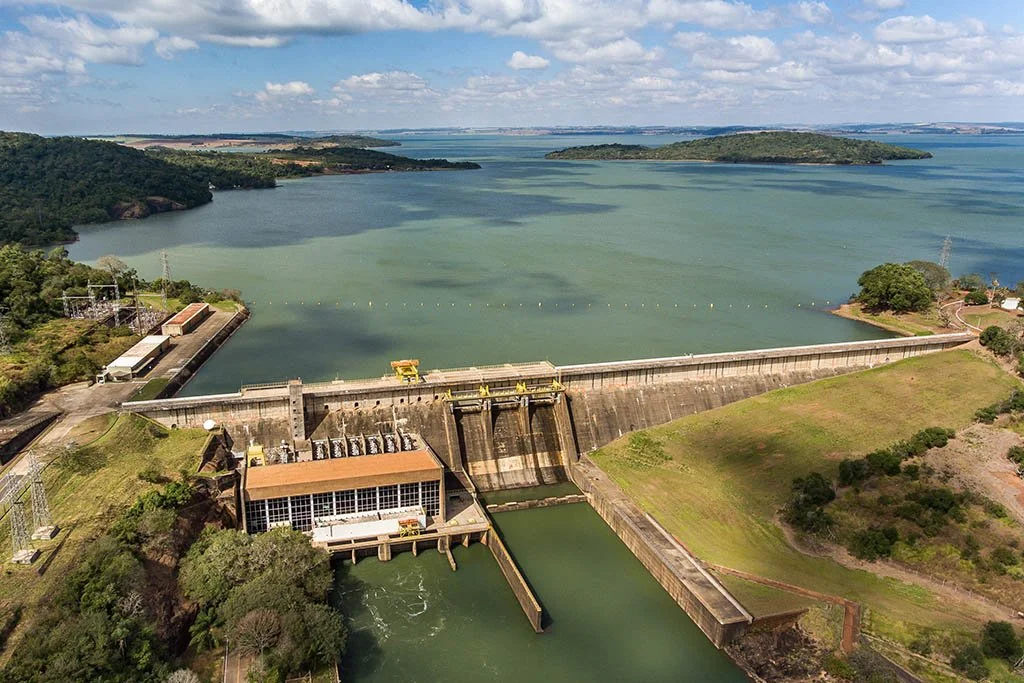
A key advantage of hydropower when compared to other technologies is that many schemes not only provide energy storage, but also water storage. That allows for multi-purpose functions, including water supply and flood protection.
Hydropower is typically more exposed to the impacts of climate change than other technologies that are less affected by droughts or floods. But unlike other technologies, hydropower can also mitigate climate change impacts, providing important services in climate change adaptation for the downstream system. As such, hydropower can be a key element in river basin management and in the water-energy-climate nexus of a wider region, which is often overlooked when assessments are made only at the project scale.
For hydropower´s role in building climate resilience at the system level, project size and longevity are key words. It is the large and long-lasting projects that have the strongest impact, both in a negative and a positive sense. If projects are carefully selected and implemented in a sustainable way, the positive impacts will prevail.
Why rehabilitation may be one of hydropower's smartest climate investments
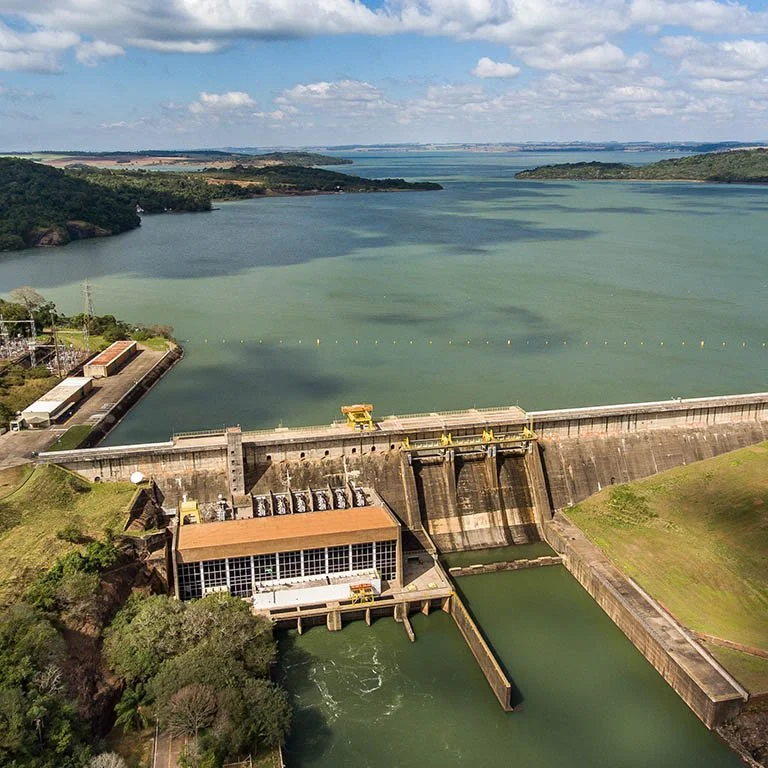
Many of these projects are already here. Over the last century, we have built a huge number of dams and hydropower plants worldwide, many of which have important system functions at the basin scale. Extending the lifespan of these plants while ensuring compliance with modern socio-environmental standards must be a priority for policymakers alongside public and private sector stakeholders.
From a socio-economic perspective, hydropower rehabilitation and project upgrades are probably amongst the wisest investments, as they maintain important energy generation and climate resilience functions at relatively low costs.
Rehabilitation projects are also very attractive investments from the perspective of climate change mitigation. This is because most greenhouse gas emissions associated with a hydropower project occur during construction and in the first years of reservoir operation. A hydropower scheme that has been operated for many decades typically emits very little new emissions.
Furthermore, the additional emissions associated with rehabilitation measures are usually quite moderate. This makes hydropower rehabilitation a very low-carbon investment, with net greenhouse gas emission intensities calculated for the extended lifespan being almost negligible.
Longevity as a climate asset
When viewed from this broader perspective, it becomes clear that hydropower´s contribution to climate change mitigation and resilience is very much determined by its long lifecycle.
We should therefore not leave the concept of ‘longevity’ to a group of super-rich individuals who dream of eternal life somewhere in the universe. Longevity also has value here on planet Earth, particularly when it comes to sustainable infrastructure that can continue benefiting our children, grandchildren and great-grandchildren for generations to come. Hydropower is a prime example of this.
AUTHOR

MORE BLOGS