Why shared rivers need shared rules – and how the HSS review can deliver it
Hydropower rarely stops at national borders. Across Africa, Asia and Europe, some of the world's most consequential energy projects sit on rivers shared by two or more countries, where decisions made upstream can reshape lives and livelihoods far downstream. As the global push to expand renewables accelerates, an increasing share of new hydropower will be developed in exactly these settings. For Dr Chukwuebuka Edum, a researcher working at the intersection of hydropower and international law, that reality raises a serious question: how can our sustainability frameworks best reflect what that means, and help address it?
The Hydropower Sustainability Alliance's Hydropower Sustainability Standard (HSS) is one of the most credible tools the sector has for assessing whether projects are genuinely responsible. Nearly five years on from its launch, the HSS is currently undergoing an in-depth review to update and improve it.
Crucially, it is also uniquely positioned to implement the principles of international water law and support transboundary discussions at the basin level. The ongoing HSS review is a timely opportunity to strengthen its requirements in this area, and to cement its role as the global reference point for sustainable hydropower on shared rivers.
A different kind of problem
When a dam sits on a shared river, its impacts do not stop at the project boundary or the national border. Water flows, sediment dynamics, ecosystems and economic benefits all move across jurisdictions, and so do risks.
These projects are embedded in international water law and interstate relations. They raise questions of equitable use, downstream harm and formal notification obligations between governments. They often require data sharing across borders, basin-wide impact assessments, and mechanisms to prevent or resolve diplomatic disputes.
And so, in these cases, the success of a project can hinge as much on cooperation between states as on engineering or finance.
This is not simply a matter of having more stakeholders to consult. It is a structurally different governance challenge that domestic sustainability frameworks were not designed to handle, and one that the HSS, with its global reach and credibility, is well placed to address directly.
The HSS already addresses many relevant themes through its environmental, social and governance criteria. The review process presents an opportunity to build on these foundations by bringing transboundary dimensions together into a more integrated and coherent framework, rather than treating them as sub-issues scattered across different sections. Doing so would allow the HSS to serve as a practical instrument for applying international legal obligations to real projects, something no other sustainability standard is better positioned to do.
International finance already treats this differently
Development finance institutions have long recognised transboundary hydropower as a distinct category. The World Bank's Operational Policy 7.50 requires that riparian states be formally notified – and given the opportunity to respond – before the Bank will finance a project on a shared waterway. The policy reflects the straightforward reality that such projects affect relations between states, not just project-level performance. The IFC and other major lenders apply similar procedures.
There is also growing interest in cooperative financing models that support basin-level governance. Work led by organisations such as the Geneva Water Hub, in partnership with the Swiss Agency for Development and Cooperation (SDC), demonstrates how shared legal and institutional frameworks can make transboundary water and energy investments more stable and more bankable.
The Cubango-Okavango River Basin Fund – a hybrid endowment established across Angola, Botswana and Namibia – is one concrete example of this kind of thinking in action.
A strengthened HSS transboundary framework could align directly with these established practices, making assessments more actionable for the developers and institutions financing cross-border projects, and reinforcing the HSS's value as a complement to international waterways policies.
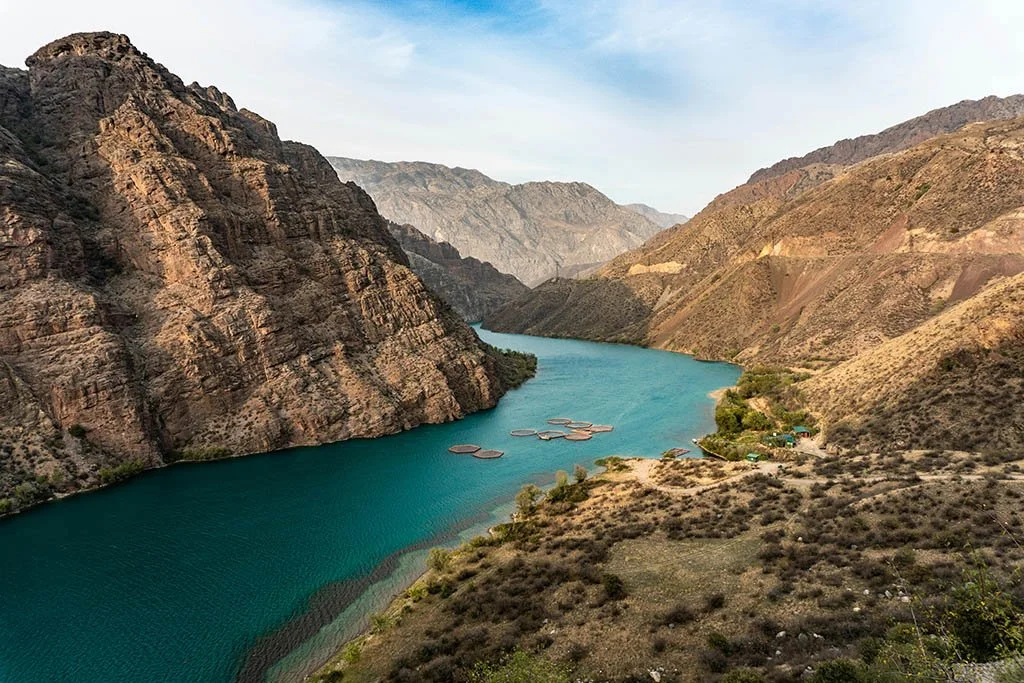
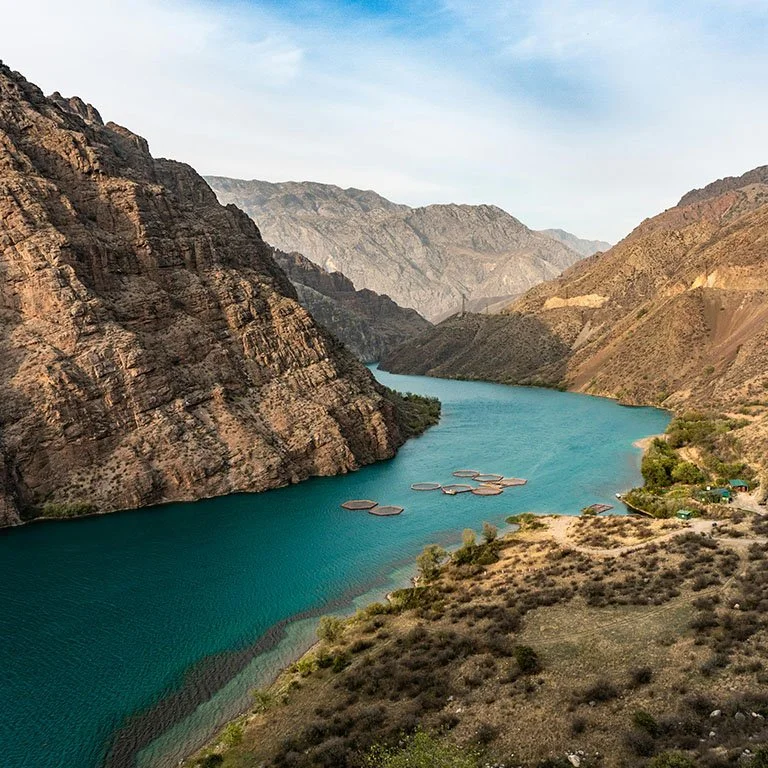
The Naryn River, Kyrgyzstan
Politics and trust are not side issues
In a national context, governance challenges sit within a single legal and institutional system. In a transboundary basin, every country brings its own laws, political priorities and historical grievances.
Data may not always be shared consistently. Legal interpretations of "equitable and reasonable use" can diverge sharply, and negotiations are often shaped by power imbalances between upstream and downstream states. Even technical decisions can carry diplomatic weight.
These dynamics matter for project outcomes. A scheme can meet high environmental and social standards within its own borders, but still face significant delays or opposition if neighbouring states feel excluded from decisions or exposed to undisclosed risk. The HSS, applied rigorously to these dimensions, is a tool that can help developers get ahead of exactly these risks – supporting transparency, building trust and creating the conditions for durable cooperation.
The ongoing disputes around the Grand Ethiopian Renaissance Dam reflect one of the most high-profile examples. Questions of equitable use, downstream harm and whether upstream states must formally notify their neighbours before proceeding have dominated relations between Ethiopia, Sudan and Egypt for over a decade, far exceeding anything that a purely national governance assessment would capture.
Similar tensions are emerging around China's planned Yarlung Zangbo project on the upper Brahmaputra, where downstream countries have raised concerns not just about hydrological impacts, but about transparency and the absence of any binding basin-wide governance framework.
The contrast with Central Asia is instructive. The Kambarata-1 project on the Naryn River is being developed as a shared regional asset. Jointly advanced by Kyrgyzstan, Kazakhstan and Uzbekistan, it is supported by international finance as a vehicle for regional integration rather than unilateral development. This is precisely the kind of cooperative model the HSS can actively encourage and reward, and strengthened transboundary criteria could give such projects the explicit recognition they deserve.
The scale of the challenge is only growing
This is not a niche concern. A substantial share of existing hydropower capacity – and an even larger share of what is planned – is located on rivers that either cross international borders or generate significant downstream impacts beyond national territory.
In Africa, around 90% of surface water resources lie in shared international basins. Most of the continent's major hydropower projects, current and proposed, sit within this context.
Across Asia, large national dams on the upper reaches of the Mekong, Brahmaputra and Indus systems generate transboundary effects regardless of where the dam wall sits.
In Europe, major shared rivers like the Danube and Rhine underpin highly interconnected energy systems, and the EU has recently listed a proposed joint Romanian–Bulgarian hydropower project on the lower Danube among its eligible cross-border renewable energy projects.
As the "easy" domestic sites are exhausted and renewable energy targets intensify, development will increasingly move into these complex shared-basin settings. The HSS review is an opportunity to ensure the HSS keeps pace, and leads.
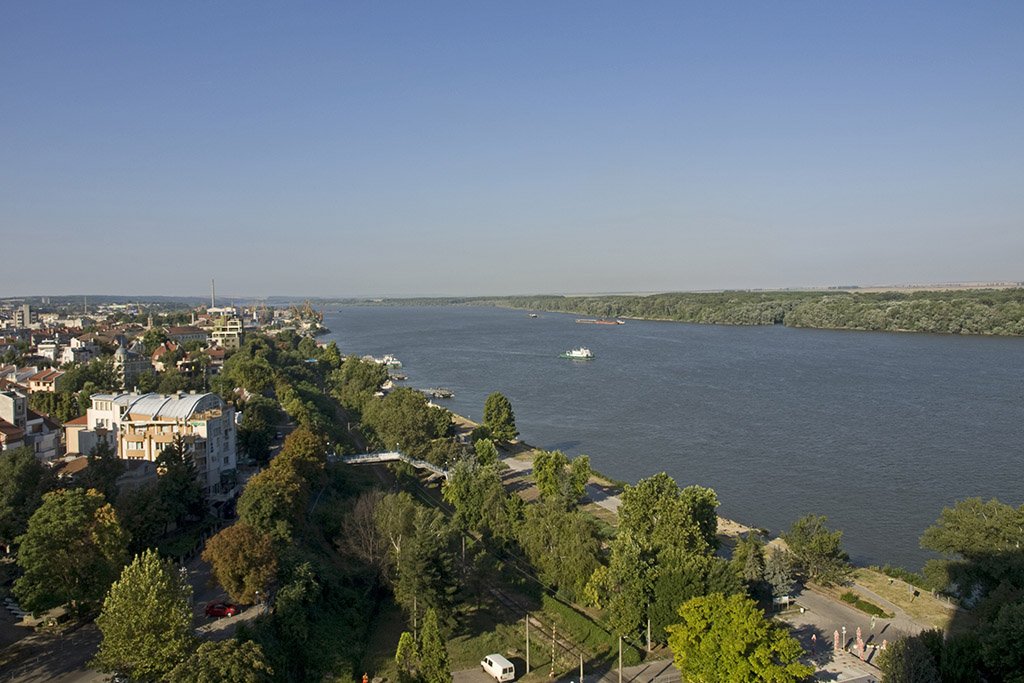
The River Danube where Bulgaria meets Romania. Photo by Ymblanter, shared via a Creative Commons Attribution-Share Alike 4.0 International license.
What a strengthened transboundary framework would deliver
The HSS has the credibility and global reach to implement international water law and support transboundary discussions in a way that no other sustainability standard can match. Strengthening its transboundary requirements would deliver practical benefits at multiple levels.
It would create conceptual coherence by consolidating requirements on notification, consultation, data sharing, basin-level impact assessments and benefit sharing into a single, integrated framework. This would make the HSS a direct instrument for applying the core principles of international water law: equitable and reasonable use, no significant harm, and prior notification.
It would strengthen risk management by helping developers and investors identify geopolitical, legal and reputational risks earlier in the project cycle, before they become costly.
And it would give positive recognition to cooperative projects that are designed from the outset as instruments of regional integration – projects that currently sit awkwardly in frameworks built around unilateral national developments, but which represent exactly the kind of outcomes the HSS should be actively promoting.
New scholarly tools are also available to support this work. The Newcastle University checklist on international law applicable to transboundary hydropower, and the Geneva Water Hub and IUCN's framework on water flow regulation in fragmented governance settings, both offer structured, practitioner-oriented foundations that the HSS could draw on directly.
Shared rivers call for shared responsibility
Hydropower sustainability has always been about balancing energy production with environmental and social responsibility. On shared rivers, that balance extends across national borders, and it depends on dialogue, transparency, fair allocation of benefits and respect for the principles of international water law.
The HSS already has the foundations. The review process is the moment to build on them. Strengthening transboundary requirements will ensure that the HSS becomes the definitive tool for implementing international law on shared rivers, supporting cooperation between states, and guiding the next generation of hydropower towards outcomes that are genuinely sustainable for everyone who depends on those waters. That seems like a worthwhile ambition.
AUTHOR

MORE BLOGS